
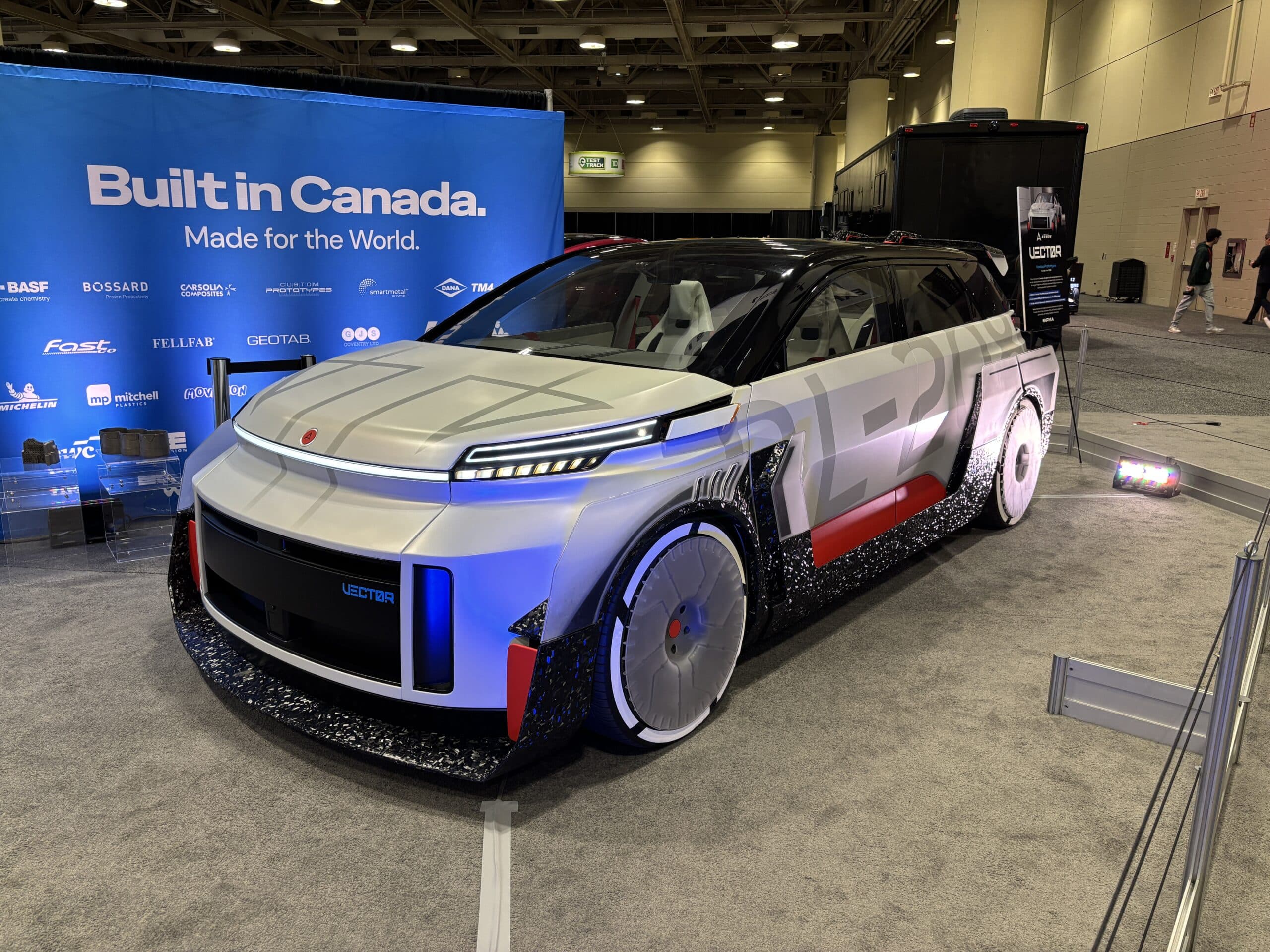
Out of 534 companies that bid to help build Canada’s electric vehicle of the future, only 58 were selected.
Weber Manufacturing Technologies was one of them.
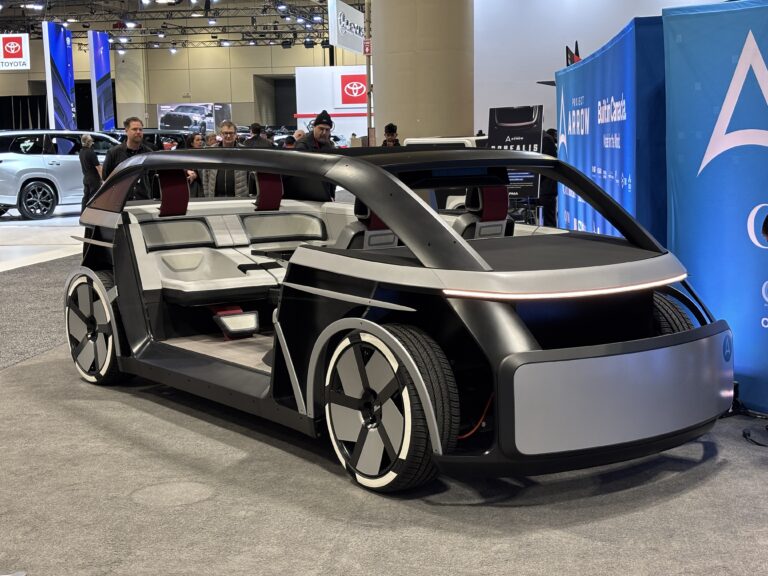
Project Arrow, led by the Automotive Parts Manufacturers’ Association (APMA), was created to showcase Canada’s full automotive supply chain capability. The mandate was ambitious: design and build a zero-emission concept vehicle using Canadian engineering, Canadian manufacturing, and Canadian innovation from end to end.
For Weber, this was not simply another tooling assignment. It was an opportunity to contribute to a national program that demonstrates what Canadian manufacturing can accomplish at the highest level.
What Is Project Arrow?
Project Arrow is Canada’s first original, zero-emission concept vehicle built almost entirely by Canadian suppliers. It brings together advanced materials, electronics, propulsion systems, interior technologies, and structural innovation into one cohesive platform.
The vehicle serves as a proof point: Canada has the engineering depth, production infrastructure, and skilled labor to compete globally in next-generation automotive manufacturing.
Being selected for this initiative required more than capability. It required trust in execution, precision, and consistency.
Weber’s Role
Weber Manufacturing was selected to support Project Arrow with:
• Rear seats
• Seat bases
• Rear seat cushions
• Rear parcel shelves
• CNC machining
• Master model development
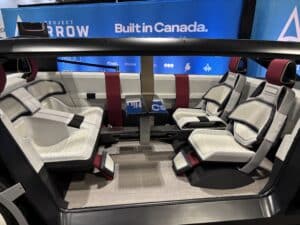
These components required precise translation from digital models into physical parts. They demanded tight dimensional control, advanced tooling strategy, and seamless collaboration within a complex supplier network.
This is not commodity work. This is high-skill, high-precision manufacturing executed by our world-class experienced toolmakers, machinists, programmers, engineers, and project leaders who understand how to move from concept to physical reality without compromise. In programs like this, tooling performance directly affects part quality, repeatability, and production stability. Surface accuracy, thermal behavior, dimensional control, and durability are not secondary considerations.
Weber’s expertise in precision machining and advanced nickel tooling played a critical role in supporting components where surface quality and geometric fidelity matter. High-performance composite parts require molds and tools that hold tight tolerances and perform consistently across cycles.
Engineering for Performance and Repeatability
Weber’s tooling supports industries where performance requirements are uncompromising. Aerospace, automotive, building systems, and industrial markets all rely on molds and tools that maintain dimensional integrity under production conditions.
For electric vehicle applications in particular, lightweight composite structures, aerodynamic surfaces, and interior elements require exceptional surface replication and repeatability. Tooling must align with cure cycles, resin systems, and structural demands without sacrificing long-term durability.
Built by Skilled Canadian Labor
At the center of this achievement is Weber’s team. Advanced tooling is not produced by software alone. It is built by machinists who understand tolerances at the micron level. By engineers who translate complex geometry into manufacturable solutions. By programmers who optimize toolpaths for efficiency and surface finish. By project managers who align timelines with production realities.
Project Arrow reflects what happens when skilled Canadian labor and disciplined manufacturing processes come together around a shared objective.
A Signal of What’s Ahead
Participation in Project Arrow reinforces Weber’s position as a trusted partner for advanced automotive and composite programs. Weber is proud to have contributed to a program that showcases Canada’s engineering and manufacturing capability on a global stage.