
Resin Transfer Molds (RTM Tooling)
RESIN TRANSFER MOLDS
Tooling for Controlled Resin Transfer
Resin Transfer Molding relies on tooling to control how resin flows, fills, and consolidates dry fiber preforms under pressure. Tool design directly affects fill uniformity, void content, surface quality, and dimensional accuracy.
Weber designs RTM tooling with a clear understanding of these process mechanics, supporting composite programs where controlled resin infusion and closed-mold processing are the appropriate manufacturing approach.
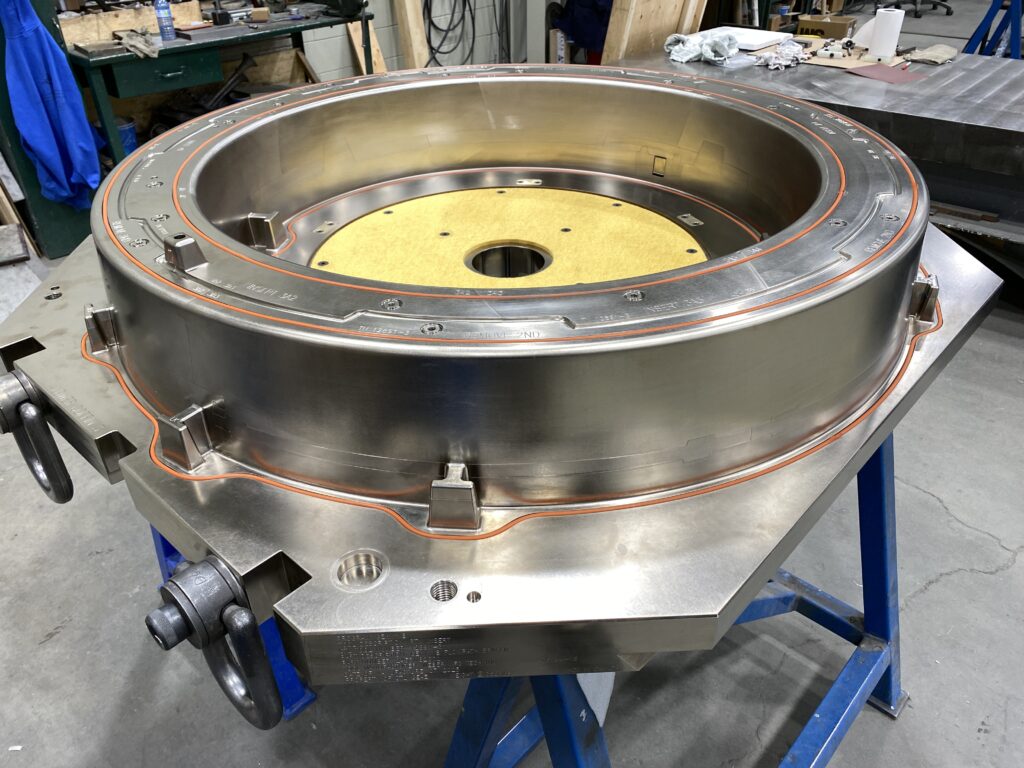
An Engineer’s Approach to Resin Transfer Molding
Resin Transfer Molding (RTM) is used in composite manufacturing when part requirements benefit from controlled resin infusion into a closed mold. Performance depends on how well tooling manages resin flow paths, injection pressure, venting, thermal behavior, and mold sealing.
Weber approaches RTM tooling by engineering the interaction between mold geometry and the infusion process itself. Flow channels, gating strategies, vent locations, and heating systems are designed together to support predictable fill behavior and consistent laminate quality.
What Drives Performance in RTM Manufacturing
Successful RTM programs depend on managing several interdependent variables. Weber engineers RTM tooling to address these factors directly:
Resin flow control
Mold geometry and internal flow features influence how resin advances through the fiber preform and reaches complete saturation.
Injection and venting strategy
Gate and vent placement affect fill timing, pressure distribution, and void formation.
Thermal management
Heating strategies stabilize resin viscosity and cure behavior during injection and consolidation.
Mold sealing and stiffness
Tool construction must maintain sealing integrity and dimensional stability under injection pressures and thermal cycling.
|
Details |
|
|
Materials |
Aluminum, P20 steel, Invar, NVD nickel shells |
|
Shell construction |
10–15 mm NVD nickel shell, welded to steel frames |
|
Heating systems |
Integrated fluid lines for heating/cooling—no external ovens required |
|
Surface finish |
Class A surface capability with conformal temperature distribution |
|
Part size support |
Up to ~100” square, 30″ deep components |
|
Insert integration |
Perimeter inserts for undercuts, openings, and edge wrapping |
|
Thermal control |
Built-in vacuum lines, thermocouples, and manifolds |
Application Examples
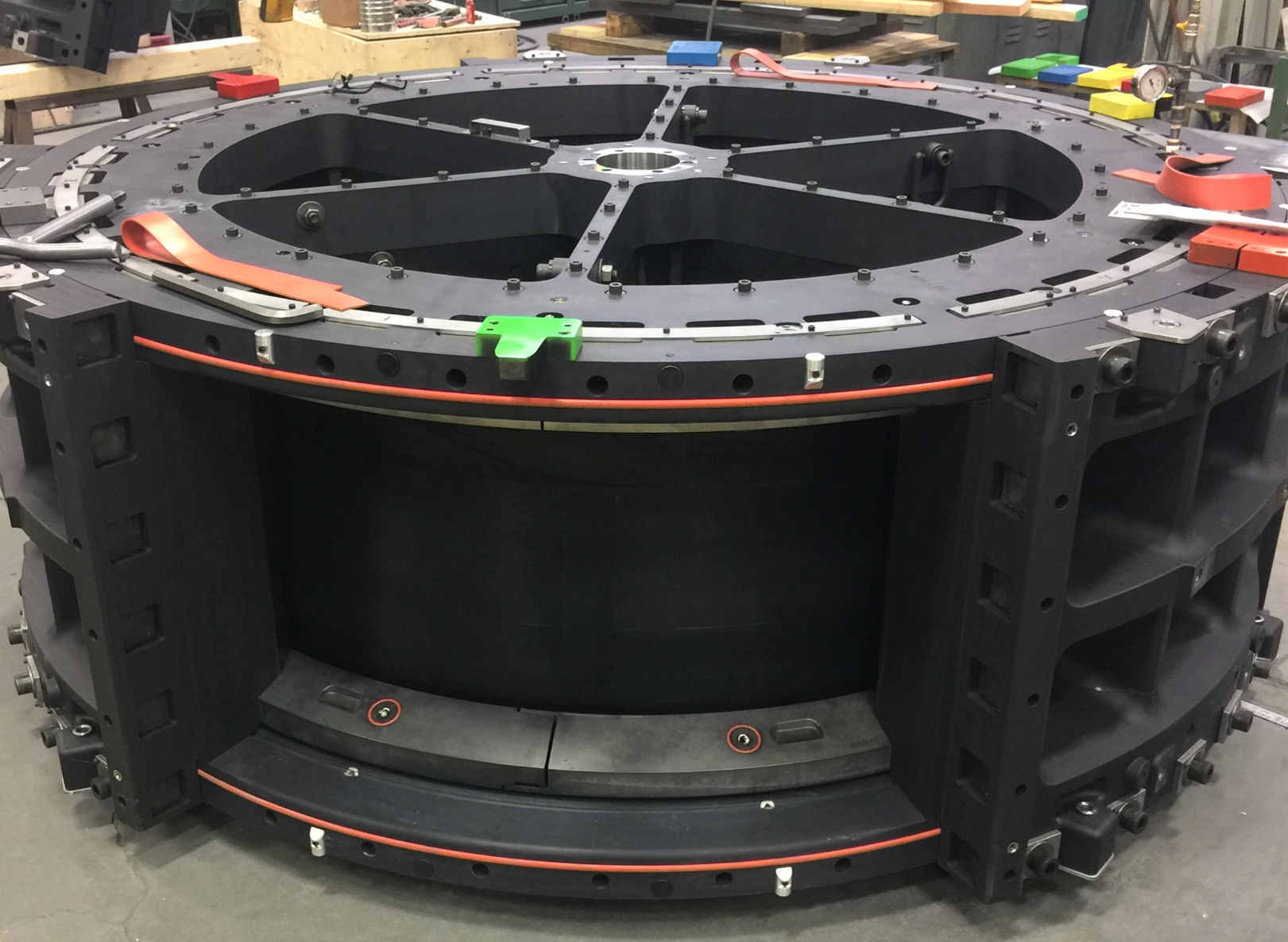
Aerospace
- RTM tools for jet fan splitters and engine housings
- Polyimide tooling for F414 engine fairings
- Fluid-heated molds for out-of-autoclave composite curing
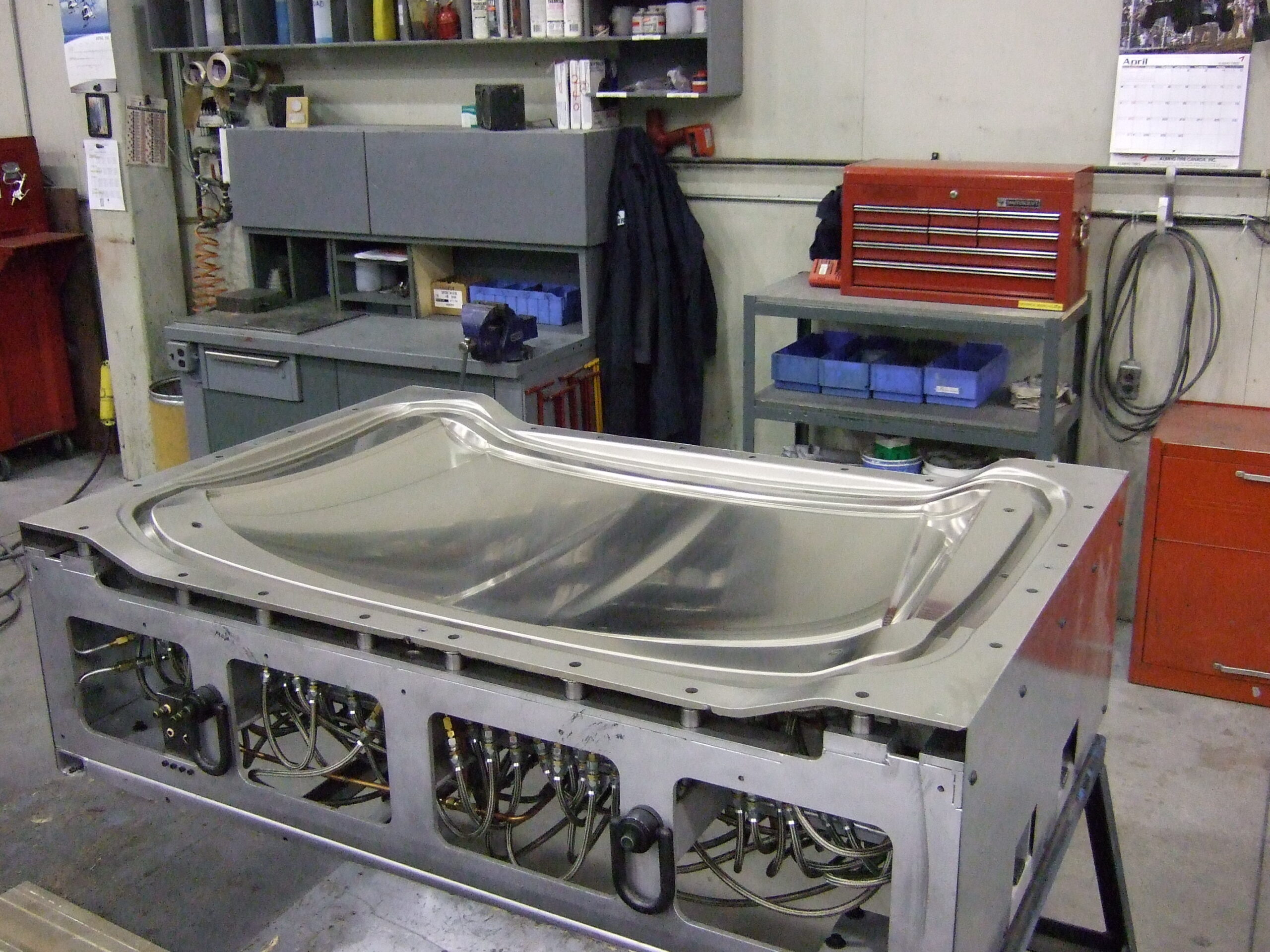
Automotive
- 10mm NVD shell RTM molds for Class A carbon fiber panels
- Integrated vacuum, thermal, and swing-out systems for multi-cavity production
- Repeated shell replication for matched mold sets from a single mandrel
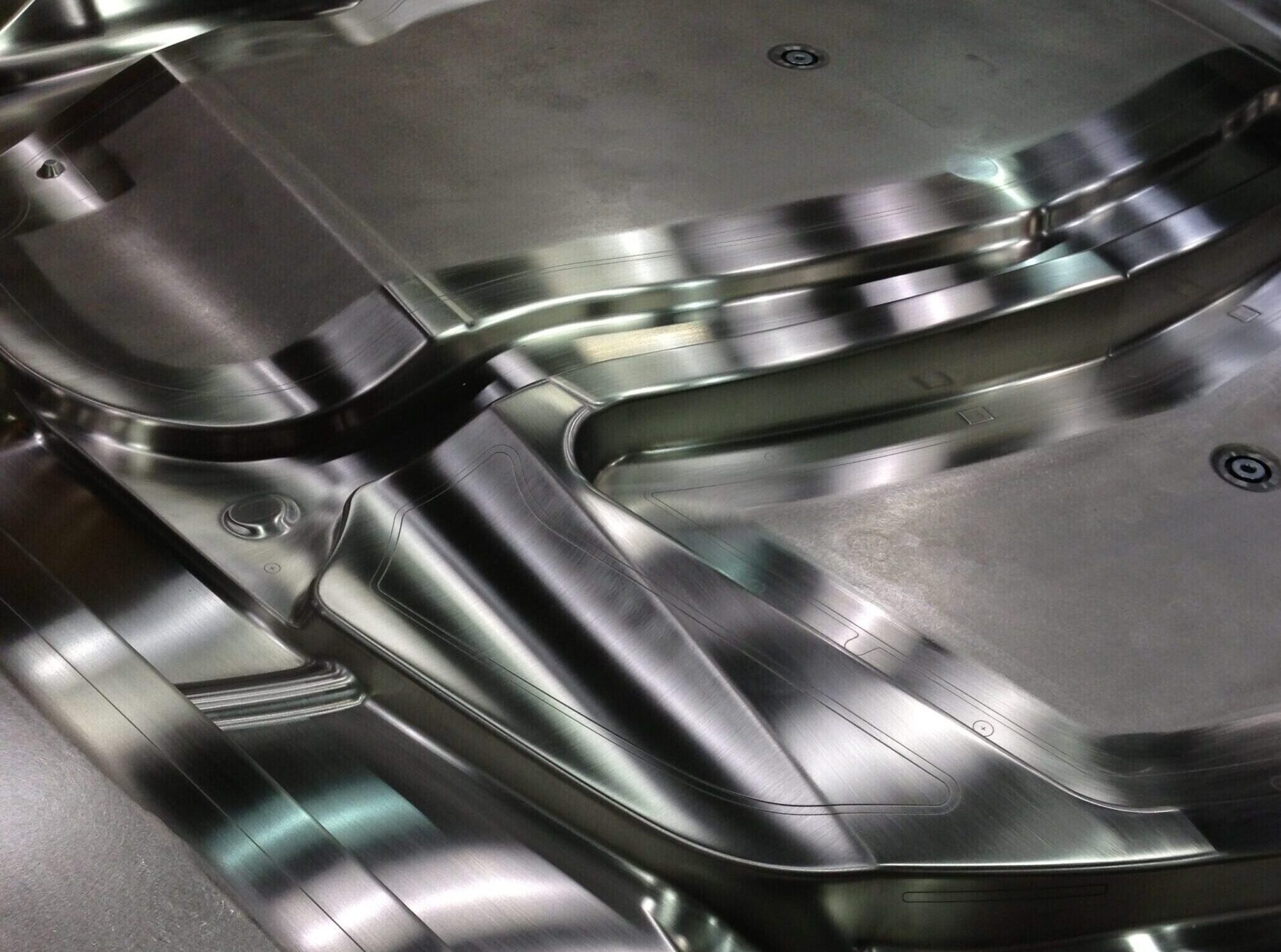
DefenCe
- Resin infusion tools for large military components
- Conformal thermal control for VBO (Vacuum Bag Only) processes
Advantages of Weber RTM Tooling
Faster Processing: Fluid-heated tools eliminate the need for external ovens
Weight & Efficiency: NVD nickel shells reduce mold weight and press force requirements
Repeatability: Multiple identical molds made from a single precision mandrel
Flexibility: Tools designed for use in or out of autoclave, clean room staging, or press-cure environments
Award-Winning Innovation: Recipient of multiple tooling innovation awards
Tooling Types We Support
- RTM Molds with fluid-heated or self-heated designs
- Layup molds with integrated vacuum systems
- Hybrid tooling with steel/NVD construction
- Large cavity and deep-draw molds for complex part geometry
- Bonding fixtures, drill fixtures, and inspection tooling (built in-house)