
Tooling Design
DESIGN CAPABILITIES
Tooling Design Built for Production Reality
Tooling design at Weber starts with how a tool must perform in the real world, not how it looks on screen. Our design process integrates advanced CAD systems, simulation, and disciplined program management to ensure tools behave as expected once they hit the press, mold, or line.
We design with full awareness of forming forces, thermal cycles, material behavior, and long-term wear — so performance is engineered in, not corrected later.
- Forming or molding process requirements
- Material behavior during heat, pressure, and cure
- Part release and handling
- Cycle time and thermal response
- Long-term durability and maintenance
Advanced CAD & Digital Tooling Models
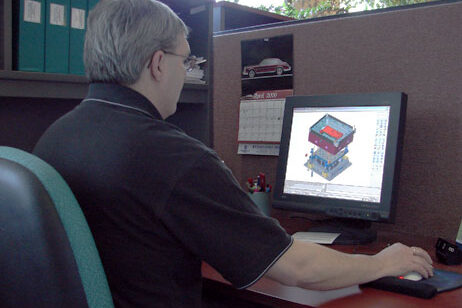
Weber uses fully parametric CAD environments to model tooling assemblies in detail, allowing rapid iteration, tight tolerance control, and clear communication across design, machining, and build teams.
Design intent is preserved from concept through release — reducing downstream interpretation errors and rework.
Design for Build, Assembly and Service
- Practical machining strategies
- Assembly access and alignment
- Replaceable wear components where appropriate
- Long-term serviceability and maintenance
Thermal & Structural Considerations
- Thermal expansion and contraction
- Heat distribution and balance
- Structural stiffness under operating conditions
- Distortion risk across tool size and geometry
Design Tightly Integrated with Prototyping and Tryout
- Prototype tool builds
- Onsite tryout and validation
- Direct feedback from tool performance
- Engineering adjustments prior to production release
Advanced CAD & Digital Tooling ModelsAssembly and Service
- Weber uses fully parametric CAD environments to model tooling assemblies in detail, allowing rapid iteration, tight tolerance control, and clear communication across design, machining, and build teams.
Simulation-Driven Design (FEA & Process Modeling)
- Load paths and stress concentrations
- Thermal expansion and distortion risk
- Deflection under operating conditions
- Material flow and contact behavior
Design for Manufacturability and Service
- Practical component segmentation
- Replaceable wear elements
- Clear datum strategies
- Design choices that reduce setup complexity and maintenance downtime
Why This Matters to You
Fewer Surprises
Faster Path to Production Readiness
Repeatable Performance Across Cycles
Long-term Reliability